Vehicle Recovery
Double Line Pull Calculations & Mechanical Advantage
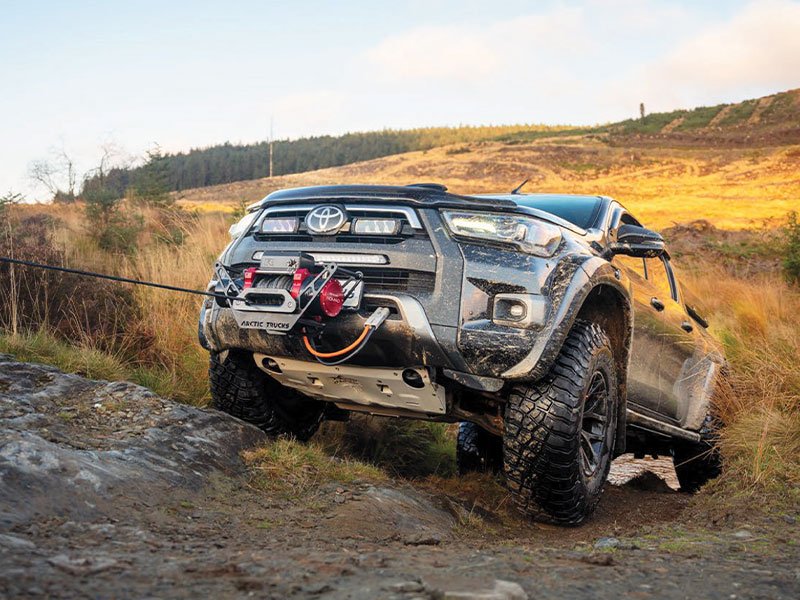
When an off-road vehicle is buried axle-deep in mud, or a commercial recovery vehicle is uprighting an overturned rig, relying on raw motor power alone is a rookie mistake. Even a world-class winch has limits.
True recovery experts rely on mechanical advantage and double line pull calculations, using rigging physics to multiply pulling force, reduce electrical strain, and keep the winch running cool.
Understanding Mechanical Advantage (MA)
Where Foutput is the actual pulling force exerted on the stuck vehicle, and Finput is the rated capacity or tension coming off the winch drum.
By introducing a pulleys (commonly called a snatch blocks in vehicle recovery), we distribute the load across multiple lines of rope, fundamentally altering the force-to-speed ratio.
1. Single-Line Pull vs. Double-Line Pull: The Breakdown
To see how this works in the field, let’s compare a standard single-line setup against a classic 2:1 double-line recovery.
Scenario A: The Single-Line Pull (1:1 Ratio)
- The Setup: The winch line runs directly from the vehicle to a tree strap or anchor point.
- The Physics: There is only one line supporting the load. If your winch is pulling with 10,000 lbs of force, the anchor point experiences 10,000 lbs of force.
- The Trade-off: Maximum line speed, but maximum amp draw on your electrical system and maximum stress on the winch motor.
Scenario B: Understanding the Double-Line Pull Calculations (2:1 Ratio)
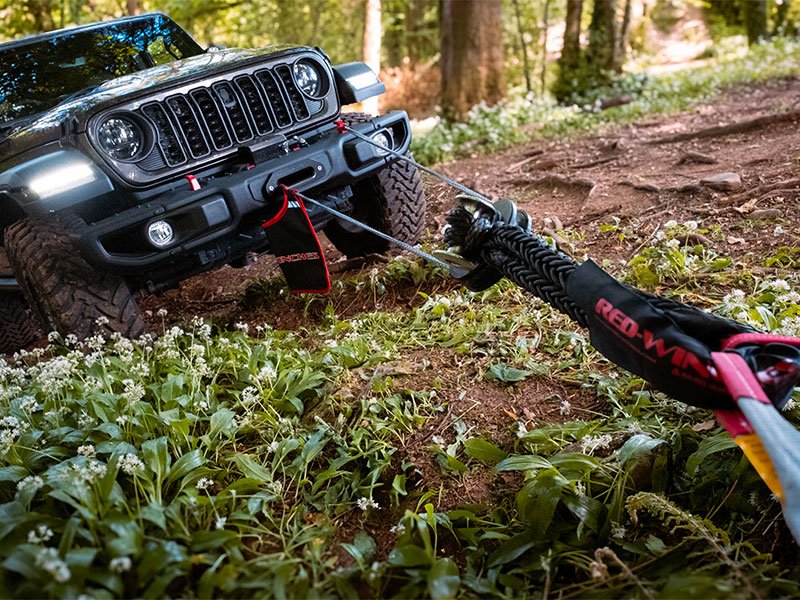
- The Setup: The winch line runs out to a snatch block attached to the anchor point, loops around the pulley, and runs all the way back to a secure recovery point on the winching vehicle itself.
- The Physics: The load is now shared equally between two lengths of rope. Because two lines are pulling the load toward the anchor, the mechanical advantage is doubled (MA = 2).
- The Result: Your 10,000 lb winch can now safely move a 20,000 lb load (minus minor frictional losses in the pulley).
Performance Comparison Matrix
|
Rigging Configuration |
Mechanical Advantage |
Effective Pulling Power |
Line Speed |
Amp Draw / System Strain |
Rope Required |
|
Single-Line |
1:1 |
1x Winch Capacity |
100% (Fast) |
High |
1x Distance |
|
Double-Line |
2:1 |
2x Winch Capacity |
50% (Slower) |
Low (Cut in half) |
2x Distance |
2. The Hidden Benefit: Protecting Your Electrical & Thermal Overhead
For high-end winches like a RED Winch, mechanical advantage isn't just about moving heavier objects; it's about thermal management and duty cycles.
When you use a 2:1 double-line pull to move a heavy vehicle, the winch motor only has to exert half the effort it would require on a single line.
- Lower Amp Draw: Drawing fewer amps protects your batteries and alternator from voltage drops.
- Heat Reduction: Drawing fewer amps means dramatically lower heat buildup in the electric motor brushes and armatures, preventing thermal trip-outs during long competition stages.
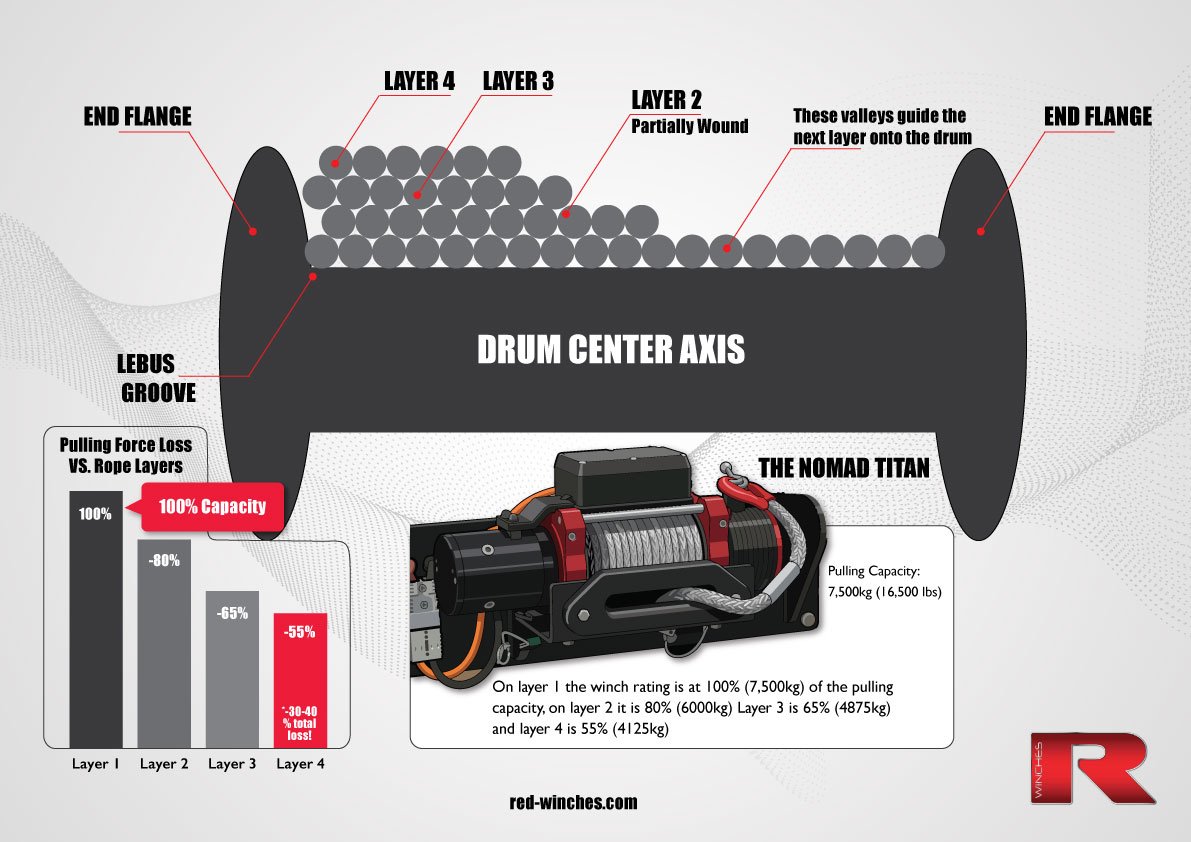
- Drum Layer Optimisation: Because a double-line pull requires twice as much rope to be spooled out, you pull from the lowest layers of the winch drum. Winches have the highest rated pulling power on the first layer of the drum, where the drum radius is smallest.
3. How to Calculate Complex Rigging (3:1 and Beyond)
For extreme heavy-duty commercial or military recovery, a 2:1 advantage may still overload the system. By adding a second snatch block, a triple-line pull (3:1) or Spanish Burton(4:1) can be achieved.
To quickly calculate the mechanical advantage of any complex recovery system, use this simple rule of thumb:
Mechanical Advantage = Number of rope lines supporting the moving load
- If the snatch block moves with the object being recovered, it adds to the mechanical advantage.
- If the snatch block is fixed to a stationary anchor (like a tree), it merely changes the direction of the pull unless the line returns to the moving object.
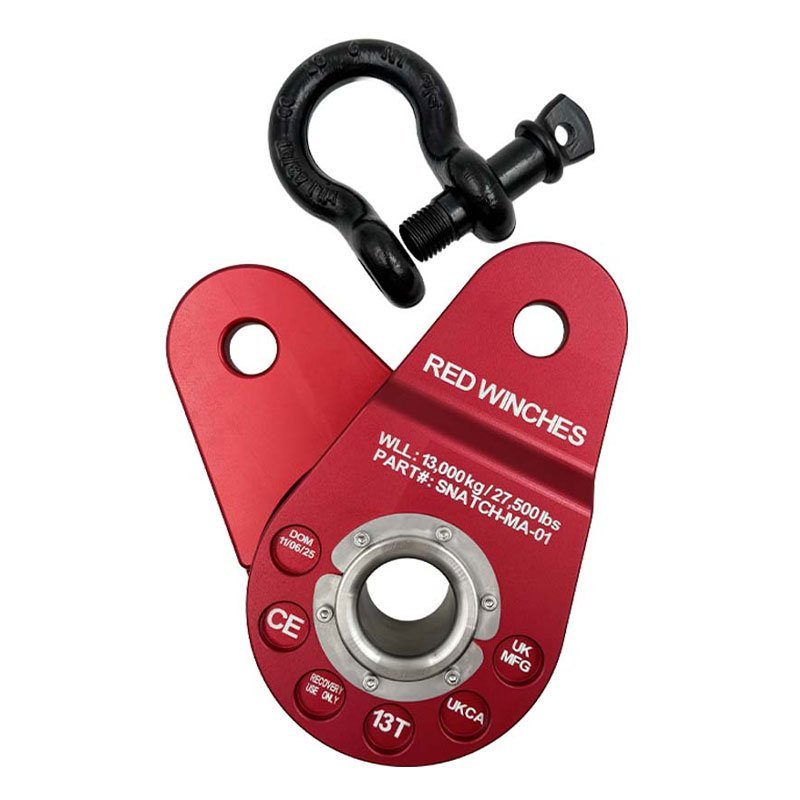
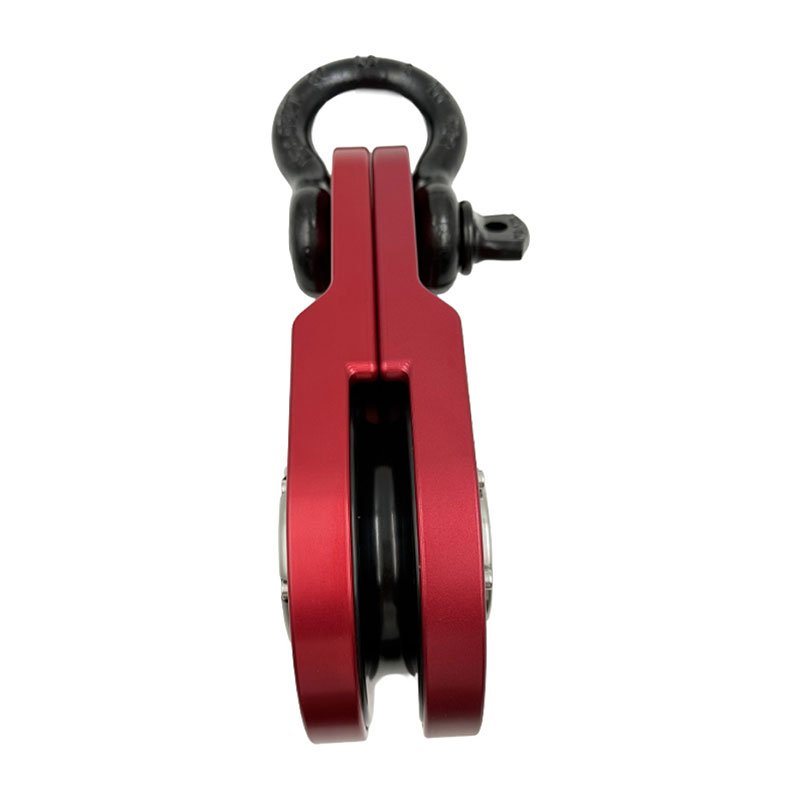
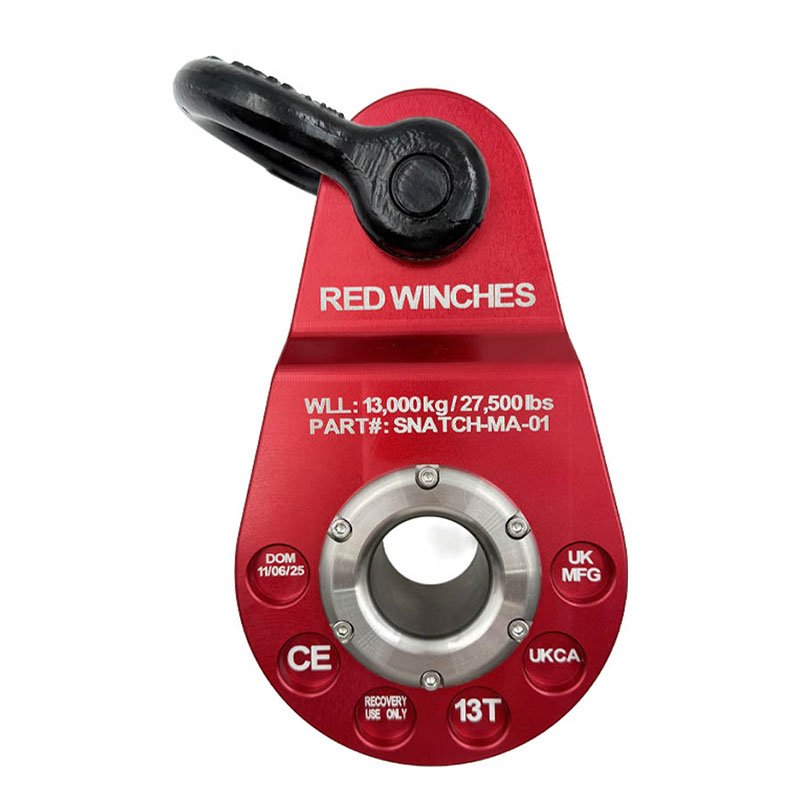
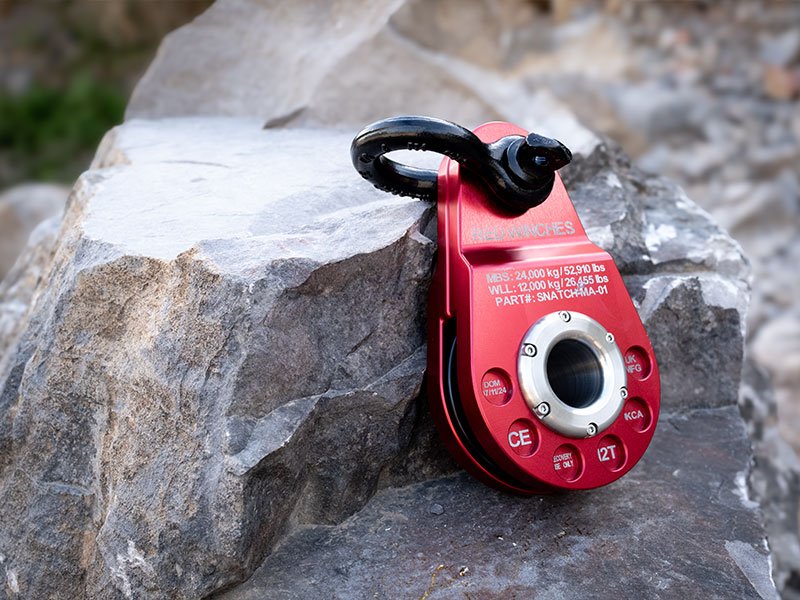
The Snatch Block SNATCH-MA-01 is a high-strength, lightweight snatch block specifically designed for synthetic winch rope. With a 13,000kg WLL and smooth pulley action on a bearing, it’s the ultimate pulley block for serious recovery setups.
Why RED Winches Engineered Components Matter
In a high-MA setup, your rigging hardware becomes the primary point of failure. Cheap, cast-iron snatch blocks create immense friction, converting your hard-earned mechanical advantage into wasted heat energy.
RED Winches' high-performance snatch blocks utilise precision-machined, aerospace-grade billet aluminium and high-load roller bearings. This ensures that when you calculate a 2:1 mechanical advantage on paper, you get nearly 100% of that efficiency delivered to the ground, keeping you moving when performance is non-negotiable.