

Kinetic Ropes vs. Winching:
The Hierarchy of Recovery
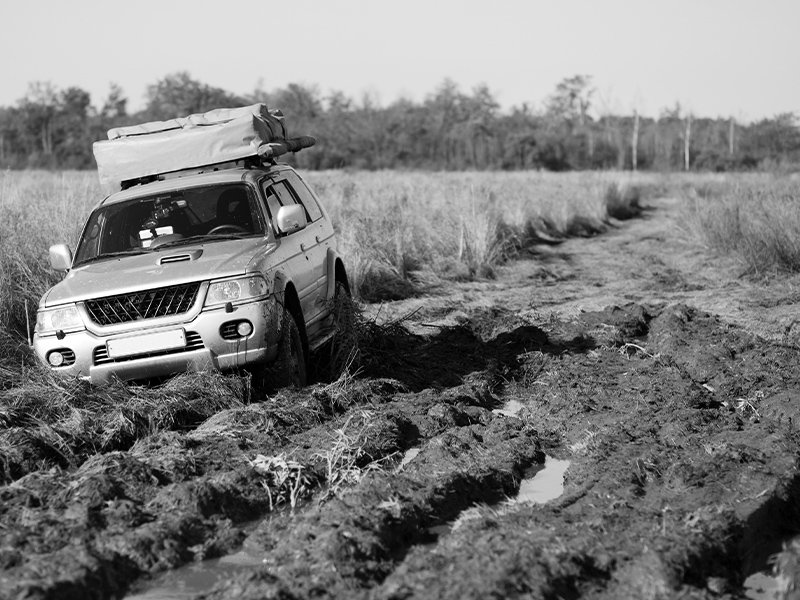
When a vehicle is immobilised off-road, jumping straight to the heavy gear isn't just inefficient; it can be introducing unessary risk. Every recovery scenario should follow a strict, logical progression.
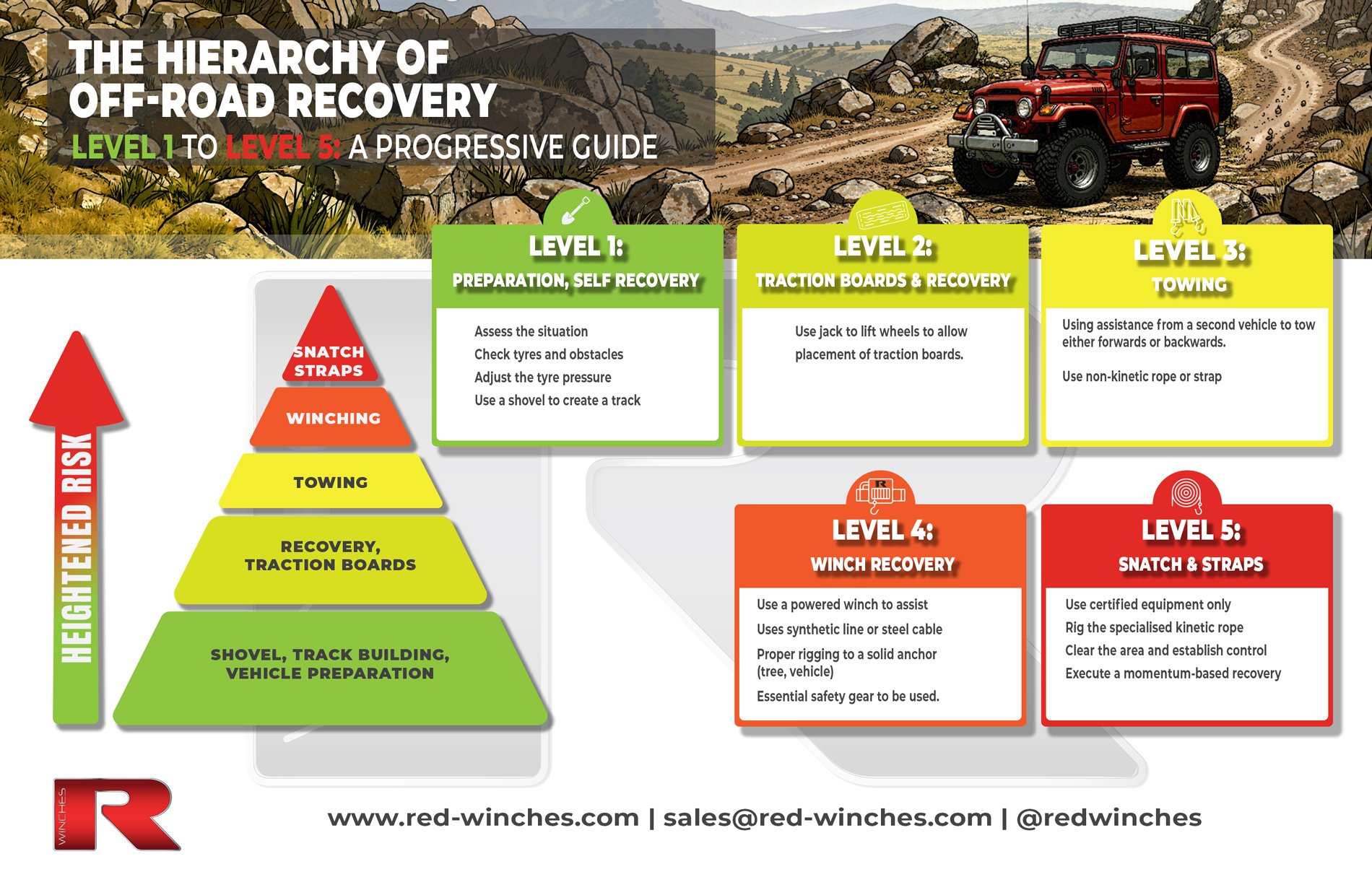
We call this the Hierarchy of Recovery. By training your team or crew to follow these steps in order, you protect your equipment, minimise strain on your vehicle's structure, and ensure the safest possible operation.
The Hierarchy of Recovery: Step-by-Step
Level 1: Self Assistance & Ground Modification
Before attaching any ropes or winches, always attempt to reduce the vehicle's resistance to the ground.
-
-
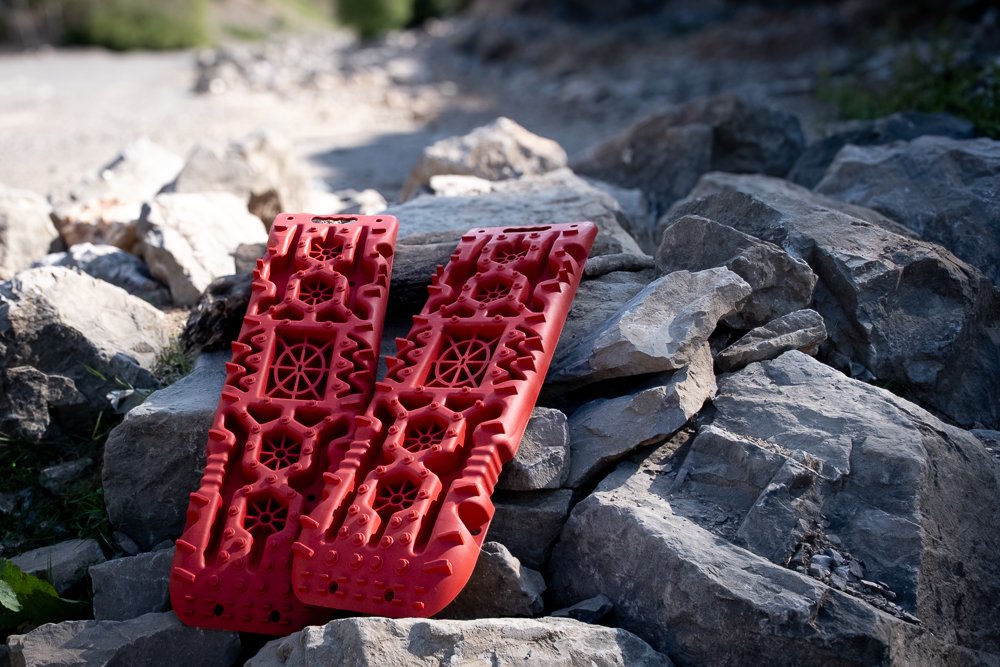
- Actions: Digging out the tyres, clearing boulders from the underbody, lowering tyre pressures (PSI) to maximise the contact patch, and deploying traction boards.
- Why it matters: Even if self-assistance doesn't fully free the vehicle, reducing the ground resistance drastically lowers the total load required in the next steps, protecting your winching equipment from hitting peak capacity.
-
Level 2: Kinetic Recovery (Dynamic Pull)
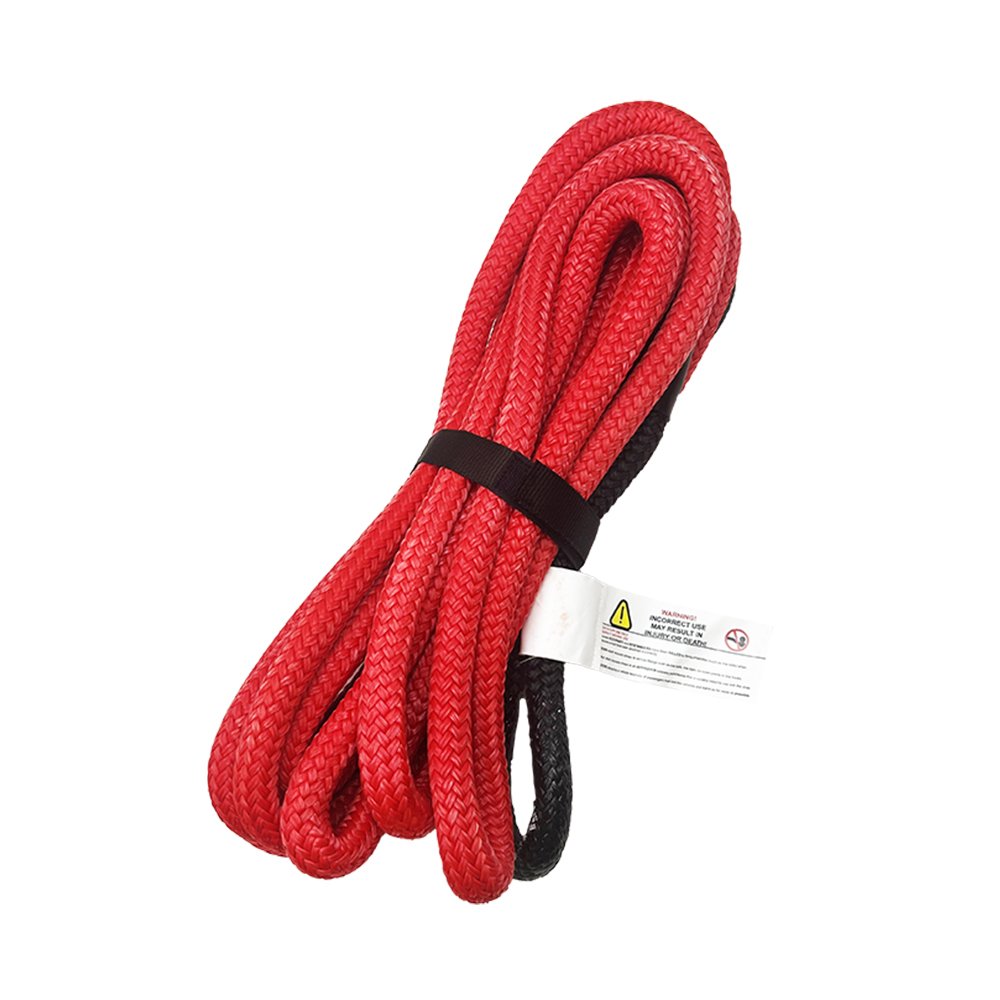
If the vehicle needs an external assist and has a clear, straight path ahead, a kinetic recovery rope is the next logical step.
-
-
- The Physics: Kinetic ropes are engineered to stretch (often up to 30%). The recovery vehicles movement is converted into kinetic energy, gently pulling the stranded vehicle out as the rope contracts.
- When to use: Short, quick snatches in soft environments like deep sand, mud, or snow where the towing vehicle has decent traction.
- The Risk: High momentum means less control. If a recovery point fails, the stored energy can be catastrophic.
-
Level 3: Single-Line Winching (Static Pull)
When a kinetic pull is too risky, lacks space, or requires absolute millimetre-precision, it’s time to unspool the winch.
-
-
- The Physics: Unlike kinetic ropes, winching is a highly controlled, static operation. There is no momentum or "running starts." The winch motor provides a steady, continuous pulling force.
- When to use: Steep inclines, rock crawling hang-ups, technical forest trails, or whenever you need complete control over the vehicle's movement to prevent rollovers.
-
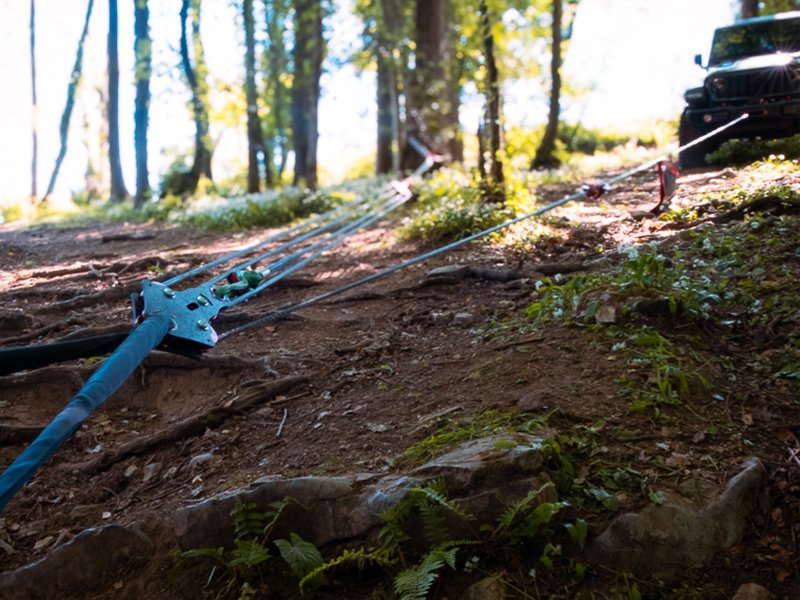
Level 4: Multi-Line Winching (Advanced Rigging)
When the vehicle's resistance exceeds the safe single-line pulling capacity of your winch, or when the winching motor is working too hard and drawing excessive amps.
-
-
- The Physics: Integrating snatch blocks to create a 2:1 or 3:1 mechanical advantage, as detailed in our engineering guide on double-line pulls.
- When to use: Heavy commercial recoveries, deep frame-soil suction bogs, or recovery operations on steep gradients where mechanical preservation of the winch is critical.
-
Kinetic Ropes vs. Winching: The Core Differences
Feature |
Kinetic Recovery Rope | Winching System (RED Winches) |
| Energy Type | Dynamic (Stored elastic energy) | Static (Mechanical power) |
| Control Level | Low (Relies on momentum) | High (Millimetre-precise movement) |
| Setup Time | Very Fast | Moderate (Rigging anchors/lines) |
| Ideal Terrain | Sand, loose snow, deep mud | Rocks, steep slopes, tight logging trails |
| System Strain | Sudden peak load on chassis | Smooth, progressive load on winching frame |
The Bottom Line: Choose the Right Tool for the Job
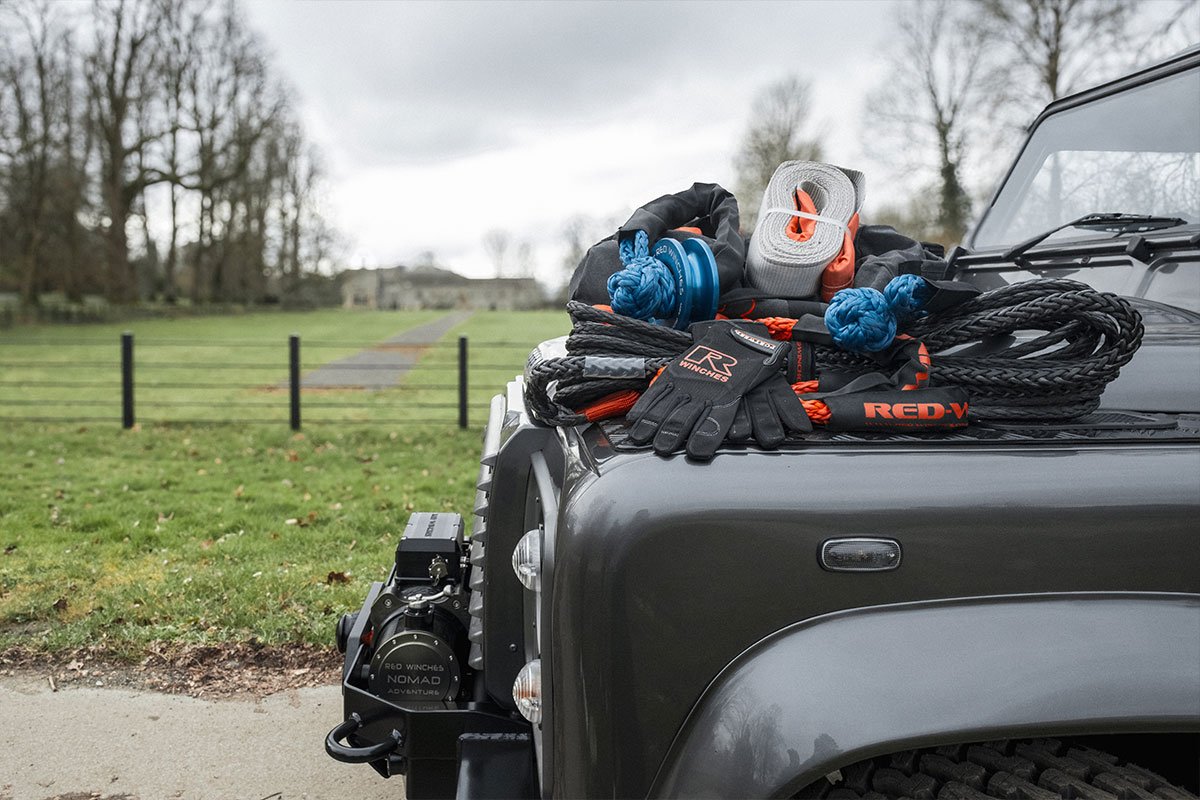
Understanding the Hierarchy of Recovery isn't just about safety, it's about mechanical longevity. Use a kinetic rope when you need rapid, momentum-driven extraction in loose terrain. Turn to your winch when you require absolute precision, massive mechanical advantage, and total control over the environment.
Equipping your rig with the right gear ensures you are prepared for any scenario. Check out our elite range of competition and commercial recovery winches to find the ultimate setup for your vehicle.