

Essential Guide:
How to Inspect and Care for Your Synthetic Winch Rope
Whether you are using your winch for green laning, recovery, or professional forestry, your synthetic rope is your lifeline. While synthetic rope offers incredible strength and weight advantages over steel wire, it requires a specific care regime to stay safe and effective
At RED Winches, we engineer our equipment to be the best, but even the best gear needs proper maintenance
Why Maintenance Matters
Good working practices don't just save you money; they prevent catastrophic failures
1. Handling and Usage Tips
-
Avoid Shock Loading: Never apply a load suddenly that is 10% greater than the recommended limit
. This can cause "invisible" internal damage that leads to failure later . -
Maintain Proper Bends: To avoid compromising the rope's strength, ensure any bend maintains a radius of at least 6 times the rope's diameter.
-
Example: For a 9mm rope, the minimum allowable bend radius is 54mm.
-
- Keep it Clean: Dirt and grit act like sandpaper inside the fibres
. Never use a pressure washer, as this forces grit deeper into the core . Instead, wash it in a container of cold water and let it dry before rewinding . - Mind the Heat: Synthetic rope is sensitive to temperature. If you use an electric winch with an internal brake, avoid winching out under load, as the drum can overheat and weaken the fibres
.


The Inspection Checklist: When to Retire Your Rope
When inspecting your rope, look for these key "red flags." If you find these, the rope should be destroyed to prevent accidental future use
| Look For | The Danger Sign |
| Inconsistencies |
Lumps, bumps, or flat areas often indicate shock load damage |
| Broken Fibres |
If 25% or more of the fibres are broken, the rope is no longer safe |
| 12-Strand Damage |
Destroy the rope if two or more adjacent strands are cut |
| Internal Wear |
Open the strands slightly; if you see powdered fibre, the internal wear is critical |
| Heat Damage |
If the rope is brittle, stiff, or discoloured from heat, it must go |
Pro Tip: Don't confuse compression with heat damage. A compressed rope will return to its original state if you manipulate it with your hands; heat-damaged rope will stay stiff
Synthetic vs. Steel: Know the Difference
Choosing synthetic over wire has massive benefits, but it changes how you work:
-
Weight: Synthetic is lightweight and reduces the "sprung mass" over your front axle
. - Safety: It has lower stored energy than wire, making it less likely to recoil violently (though you should still use a damper!)
. - Repairs: Unlike wire, synthetic rope can be repaired by splicing in an emergency, though this should only be a temporary fix until the rope can be replaced
.
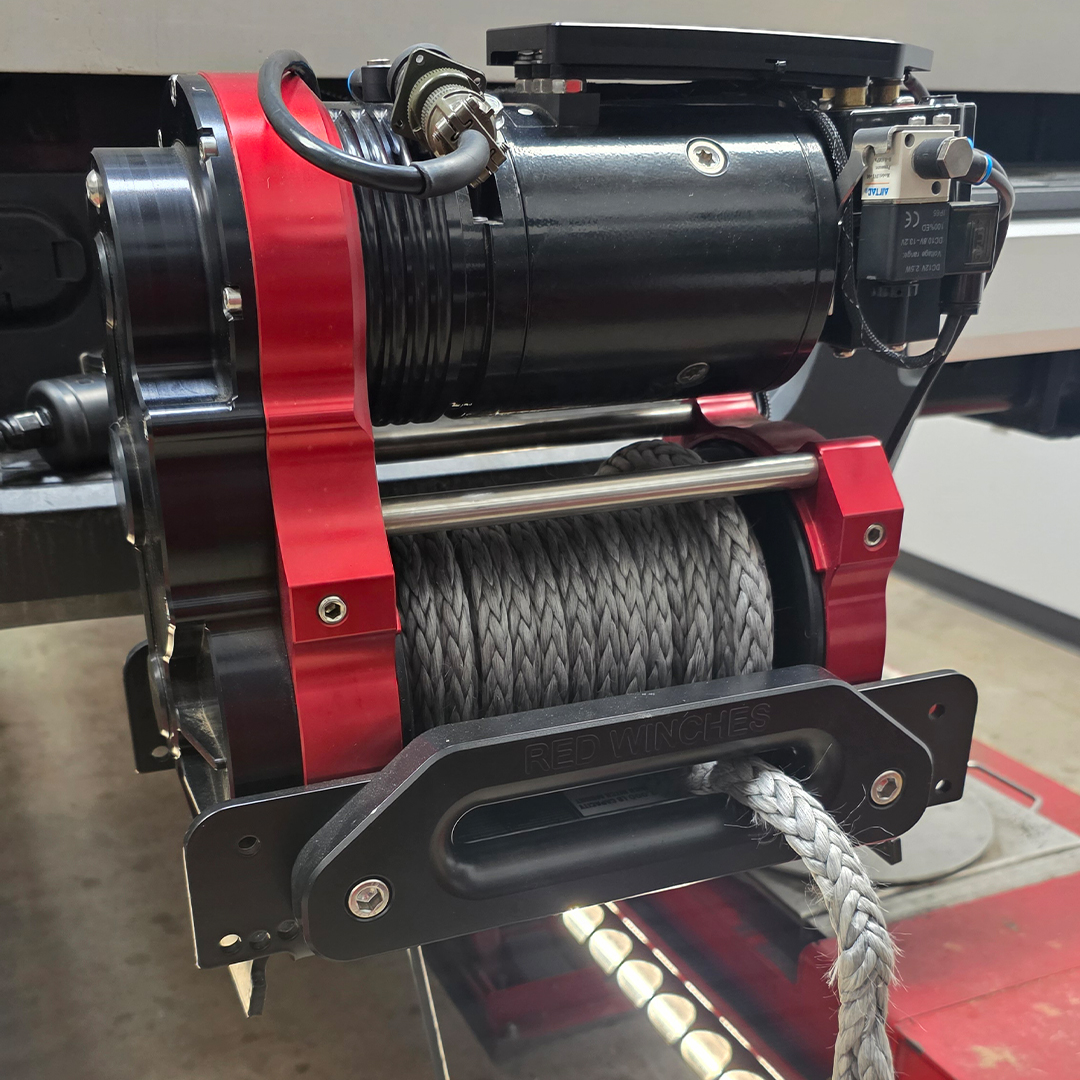
Technical Snapshot: 11mm Synthetic Plasma
For those looking for maximum performance, the 11mm Synthetic Plasma offers a staggering Minimum Breaking Strain of 11702kg, nearly double that of 9mm wire
Stay Safe on the Trails
Keep a log of your rope's history, mark it with a unique ID number, and never tread on it